Value Air & Heat FAQs
Find answers to some of the most frequently asked questions about heating, cooling, and indoor comfort services in St. Petersburg, FL. Our goal is to help homeowners make informed decisions about their HVAC systems.


Frequently Asked Questions About HVAC Services
What is the difference between HVAC and AC?
HVAC stands for heating, ventilation, and air conditioning. It covers the whole system that heats, cools, filters and moves air through your home. AC is only the cooling part. In St. Petersburg, most homes have a central AC or a heat pump that handles both cooling and the occasional winter heating, all inside one HVAC system.
What are the main parts of a central air conditioning system?
A central AC system has five main parts:
- the outdoor condenser (compressor, condenser coil and fan)
- the indoor air handler (blower and evaporator coil)
- the refrigerant lines connecting the two
- the ductwork and return vents
the thermostat
In Florida, the condensate drain line matters too. It carries away the moisture your AC pulls from the air, and a clog is one of the most common causes of summer service calls.
How often should I change my AC filter in Florida?
Change standard 1-inch filters every 30–60 days in Florida. AC systems here run most of the year, so filters clog faster than in milder climates. Homes with pets, allergies or nearby construction should change them monthly. Thicker 4–5 inch media filters usually last 6–12 months. For most homes, a MERV 8–11 filter balances clean air and good airflow. Ask a technician before going higher, because restrictive filters can strain some systems.
What is the 20-degree rule for air conditioning?
The 20-degree rule says a central AC can usually cool your home only about 20°F below the outdoor temperature. On a 95°F St. Petersburg afternoon, about 75–78°F inside is realistic. Setting the thermostat to 68°F won’t cool the house faster. It only makes the system run nonstop. Technicians also check a related number: air coming out of the supply vents should be about 15–20°F cooler than air going into the return.
Is it normal for my AC to run constantly during a Florida summer?
Yes, within limits. On 90°F+ days, a correctly sized AC may run almost nonstop through the hottest afternoon hours. Normally it runs in cycles of about 15–20 minutes, two to three times an hour. It’s a problem if the house never reaches the set temperature by evening, the vents blow lukewarm air, ice forms on the lines, or your bills jump without explanation. Those signs point to low refrigerant, dirty coils, leaky ducts or an undersized system.
Is it OK to close air vents in rooms I don’t use?
Usually not. Central AC systems are designed to move a set amount of air. Closing several vents raises pressure in the ducts, which can force air out through duct leaks, reduce airflow across the coil, and even cause the evaporator coil to freeze. It rarely saves energy. If certain rooms are always too hot or too cold, fixing the ductwork or adding a mini split for those rooms works better.
Do ceiling fans help lower air conditioning costs?
Yes. Ceiling fans don’t cool the air, but the breeze makes you feel about 4°F cooler. That lets you set your thermostat higher without losing comfort. In summer, set fans to spin counterclockwise so they push air down, and turn them off when you leave the room. They cool people, not rooms. Fans plus a slightly higher thermostat setting is one of the cheapest ways to lower cooling costs in Pinellas County.
Should I turn off my AC during a thunderstorm?
If lightning is close by, turning the AC off at the thermostat is a reasonable precaution. Power surges from lightning can damage the compressor, capacitor and control board, which are some of the most expensive repairs on a system. Since St. Petersburg gets frequent summer storms, the better long-term protection is a surge protector at the outdoor unit or a whole-home surge protector. When the storm passes, wait a few minutes before turning the AC back on.
Should I cover my outdoor AC unit?
No, not in Florida. Your outdoor unit is built to sit outside, and covering it traps moisture, speeds up corrosion and gives rodents a place to nest. If someone runs the AC with a cover still on, it can overheat and damage the compressor. Instead, keep about 2 feet of clearance around the sides and 5 feet above it, trim back plants, and rinse off salt and debris now and then.
What temperature should I set my AC to when I’m on vacation in Florida?
Set it between 82°F and 85°F. Don’t turn it off. Your AC also removes humidity, and in a closed-up Florida home, indoor humidity can climb above 60% within days. That’s the level where mold, mildew and musty odors start. Keeping the system running at a higher setting protects your home and still saves energy. A smart or programmable thermostat can cool the house back down before you get home.
Helpful HVAC Information For St. Petersburg Homeowners
Your heating and cooling system is essential to maintaining year-round comfort in Florida’s changing climate. At Value Air & Heat, we help homeowners better understand their HVAC systems, improve efficiency, and make confident decisions about repairs, maintenance, and replacements. Explore our frequently asked questions below or contact our team for expert guidance.
Comfort Solutions Designed For Your Home
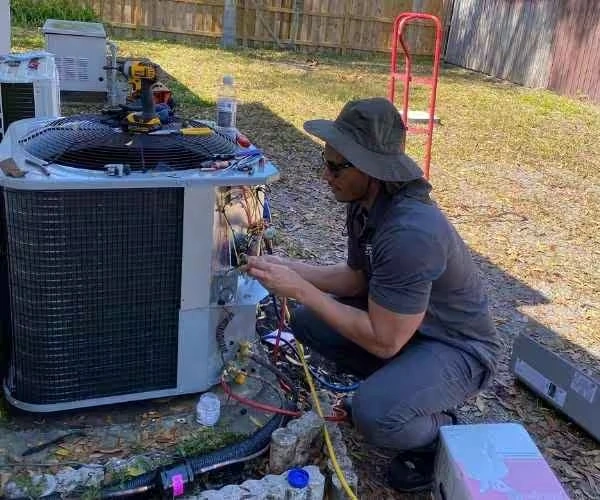
Value Air & Heat is committed to providing dependable HVAC services backed by professional workmanship, honest recommendations, and customer-focused care. Our team works hard to deliver solutions that help homeowners maintain reliable comfort and efficient system performance throughout the year.
- Experienced HVAC Technicians
- Dependable Service & Honest Guidance
- Heating, Cooling & IAQ Solutions
- Long-Term Comfort & System Reliability
- Proudly serving St. Petersburg homeowners with trusted heating and cooling solutions.
- Professional HVAC services focused on comfort, efficiency, and reliable performance.
- Need HVAC assistance? Call 727-418-3211 or schedule service with Value Air & Heat today.